
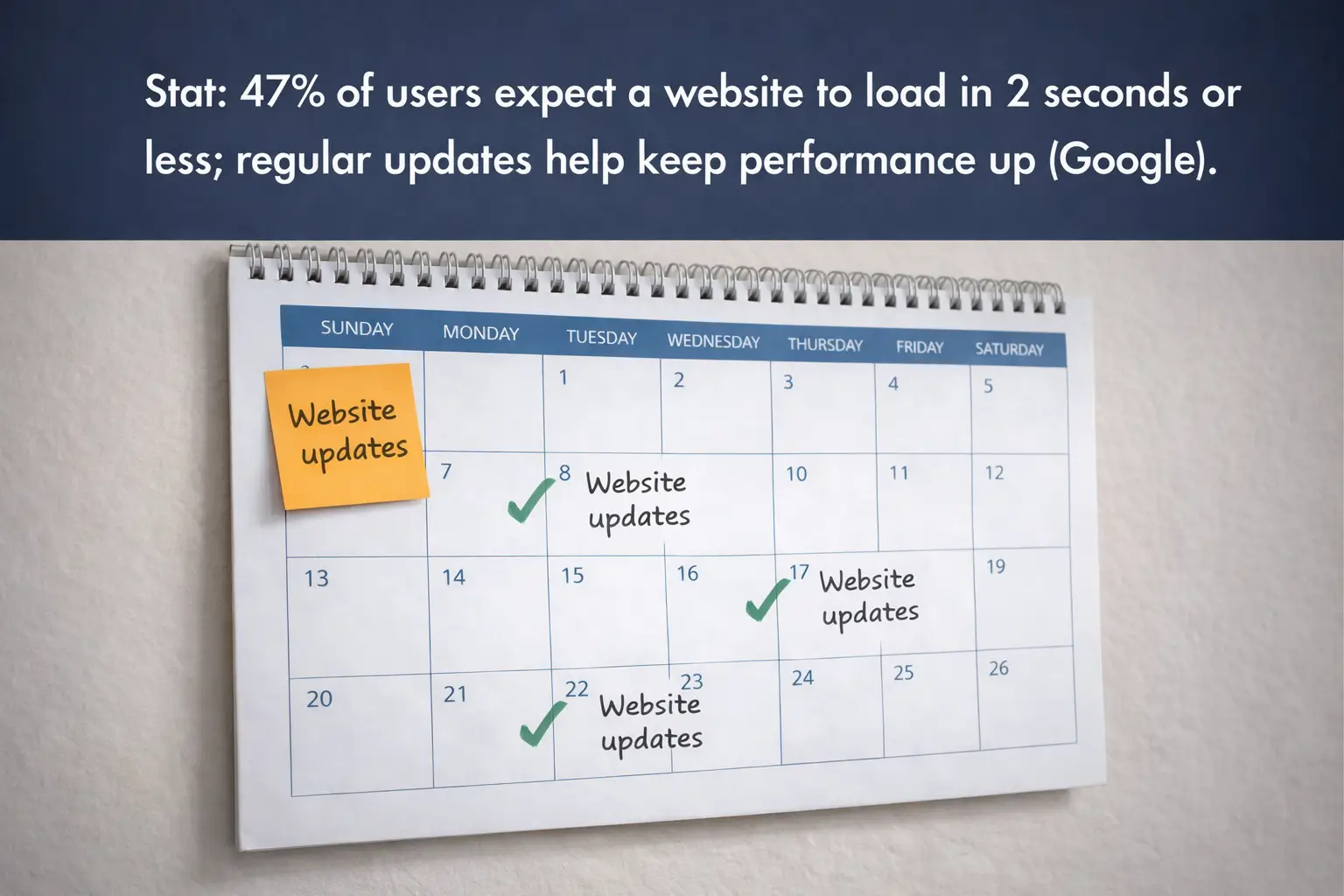
How often should you update your website? It’s one of the most common questions business owners ask, and for good reason. Your website isn’t a “set it and forget it” project. It’s a living, revenue-generating asset that should evolve as your business grows.
If your website stays stagnant, your rankings, performance, and credibility can decline. Regular website updates keep your site secure, optimized, and competitive.
So, how often should you update your website? Let’s break it down.
Monthly Website Updates: Content & Engagement
Some updates should happen every month.
These include:
- Publishing blog posts
- Updating testimonials
- Adding new case studies
- Promoting seasonal offers
- Refreshing portfolio items
Fresh content signals to search engines that your site is active. According to Google’s Search guidelines, regularly updated content supports better visibility and user trust.
Monthly updates also show visitors that your business is engaged and evolving.
Takeaway: Add new value to your website at least once a month.
Quarterly Website Updates: Maintenance & Performance
Core technical updates should happen at least every quarter — if not more frequently.
These include:
- Plugin updates
- Theme updates
- Security patches
- Speed optimization
- Performance audits
- Broken link checks
If you’re running on platforms like WordPress, updates are critical to prevent vulnerabilities and compatibility issues.
Without regular maintenance, websites slow down, security risks increase, and SEO performance drops.
Takeaway: Schedule technical reviews every 3 months at a minimum.
Every 2–3 Years: Design Refresh
Even if your website functions well, design trends and user expectations change.
A full design refresh every 2–3 years ensures:
- Modern user experience
- Mobile optimization
- Improved conversion flow
- Updated branding
- Competitive positioning
If your bounce rate is rising or conversions are declining, it may be time to revisit your website strategy.
Takeaway: Redesign strategically, not reactively.
Why Updating Your Website Matters for SEO
When considering how often you should update your website, remember that search engines prioritize:
- Fresh content
- Fast performance
- Secure infrastructure
- Mobile responsiveness
- Strong user experience
Regular updates improve rankings, reduce bugs, and enhance usability.
An outdated website can signal neglect, both to Google and to potential customers.
Signs Your Website Needs an Update Now
You may need immediate updates if:
- It loads slowly
- It’s not mobile-friendly
- Your services have changed
- Your branding looks outdated
- Security warnings appear
- Rankings are declining
Your website should grow with your business, not hold it back.
Final Thoughts: How Often Should You Update Your Website?
So, how often should you update your website?
- Monthly for content
- Quarterly for maintenance
- Every 2–3 years for design
Consistent updates improve SEO, strengthen trust, and ensure your website continues converting visitors into customers.
Your website should work as hard as you do.
If you’re unsure when your last update was or whether your site is performing at its best, it may be time for a professional review.




0 Comments