
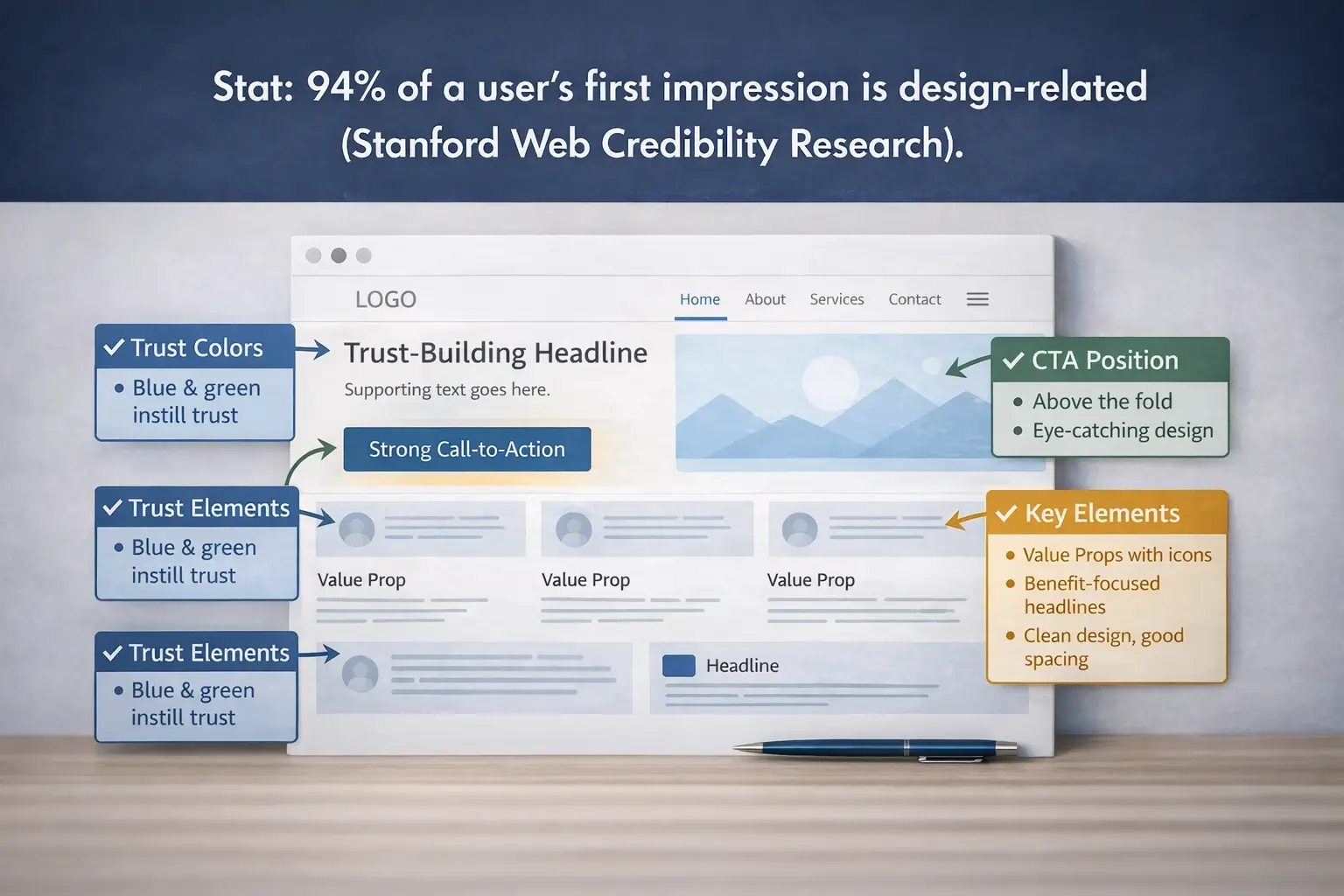
Psychology behind smart web design plays a critical role in how users interact with your website. A great website doesn’t just look visually appealing; it feels intuitive, trustworthy, and easy to use. That’s because strategic web design aligns with how people think, process information, and make decisions.
When design is guided by psychology, it removes friction, builds trust, and increases conversions without users even realizing it.
Why Psychology Matters in Web Design
Every visitor arrives at your website with limited attention and subconscious expectations. Within seconds, they decide whether to stay or leave.
The psychology behind smart web design helps:
- Build instant credibility
- Reduce cognitive overload
- Guide attention toward key actions
- Increase user confidence
- Improve conversion rates
When users feel comfortable, they stay longer. When they trust what they see, they take action.
How Color Influences Emotion and Behavior
Color psychology is one of the most powerful elements in smart web design.
- Blue builds trust and security
- Green signals growth and balance
- Red creates urgency
- Black communicates luxury
- White space creates clarity
Strategic color choices affect how users emotionally respond to your brand. The psychology behind smart web design ensures colors are chosen intentionally, not randomly.
The Power of Spacing and Visual Hierarchy
White space (also called negative space) reduces mental clutter. When a layout feels crowded, users experience cognitive strain.
Smart spacing:
- Improves readability
- Makes content easier to scan
- Highlights important elements
- Creates a premium feel
Visual hierarchy, using size, contrast, and positioning, tells users what matters most. Headlines draw attention first. Buttons stand out. Supporting text follows naturally.
This subtle structure guides behavior without forcing it.
Typography and Readability Impact Trust
Fonts affect perception more than most people realize.
- Clean sans-serif fonts feel modern and accessible
- Serif fonts feel traditional and authoritative
- Poor typography reduces credibility instantly
The psychology behind smart web design ensures fonts are readable across devices and aligned with brand identity.
If users struggle to read your content, they won’t stay long enough to convert.
Button Placement and Decision Speed
Call-to-action buttons influence how quickly users make decisions.
Strategic placement:
- Above the fold for immediate visibility
- After benefit-driven sections
- Near testimonials to reinforce trust
- At natural stopping points
The psychology behind smart web design removes hesitation by making the next step obvious.
When users don’t have to think about what to do next, they act faster.
Friction vs. Flow: The Invisible Experience
Great web design feels effortless.
Users shouldn’t wonder:
- Where to click
- How to navigate
- What a service includes
- Whether a business is legitimate
When friction is removed, flow increases. And flow leads to conversions.
The psychology behind smart web design focuses on reducing uncertainty at every stage of the user journey.
Why Smart Web Design Converts Better
Businesses often focus on aesthetics alone. But aesthetics without psychology don’t convert consistently.
When design aligns with human behavior:
- Bounce rates decrease
- Engagement increases
- Trust builds faster
- Conversions improve
Smart web design is not about trends, it’s about understanding how people think.
Final Thoughts
The psychology behind smart web design proves that effective websites are built on more than creativity. They are built on strategy, behavioral understanding, and intentional structure.
When design is based on how people think, not just how things look, your website becomes intuitive, trustworthy, and conversion-driven.
If you want a website that feels right and performs even better, it starts with psychology.
0 Comments