
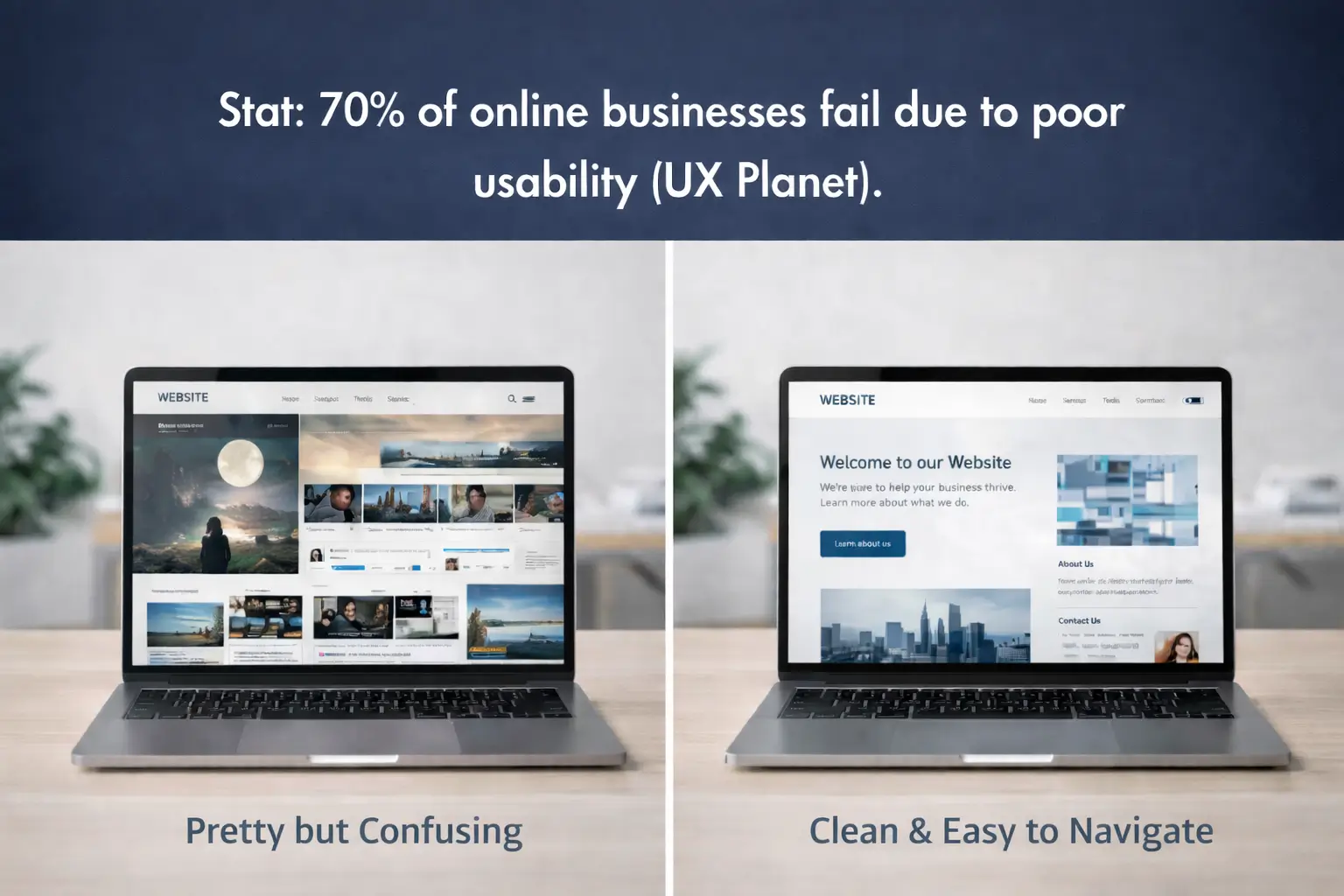
If you run a business, your website isn’t just decoration. It’s a revenue-generating tool.
Ignoring the UI vs UX difference can lead to:
- High bounce rates
- Low engagement
- Poor conversion rates
- Lost trust
- Missed sales opportunities
On the other hand, combining strong UI and strategic UX can:
- Increase time on site
- Improve conversion rates
- Build brand authority
- Strengthen credibility
- Support long-term growth
Design decisions should always serve user behavior.
Common Mistake: Focusing Only on Aesthetics
Many businesses invest heavily in visuals but neglect structure and usability.
Common problems include:
- Beautiful layouts with confusing navigation
- Over-designed pages with no clear CTA
- Attractive branding but slow performance
- Stylish typography that hurts readability
This is where misunderstanding the UI vs UX difference causes performance issues.
Design must look good, but it must work even better.
How to Balance UI and UX Effectively
The best websites blend aesthetics with strategy.
To balance UI and UX:
- Keep layouts visually clean and purposeful
- Use color intentionally to guide attention
- Make navigation simple and predictable
- Place calls-to-action strategically
- Test user behavior and refine flow
When visuals and functionality align, your website feels effortless to use.
And effortless websites convert better.
Final Thoughts
The UI vs UX difference isn’t just a technical distinction; it’s a business advantage.
UI shapes perception.
UX shapes performance.
When you combine visually appealing design with an intuitive, frictionless experience, your website becomes more than attractive; it becomes strategic.
If your site looks great but isn’t converting, it may not be a design problem. It may be a UX problem.
The strongest websites don’t choose between UI and UX. They master both.




0 Comments