
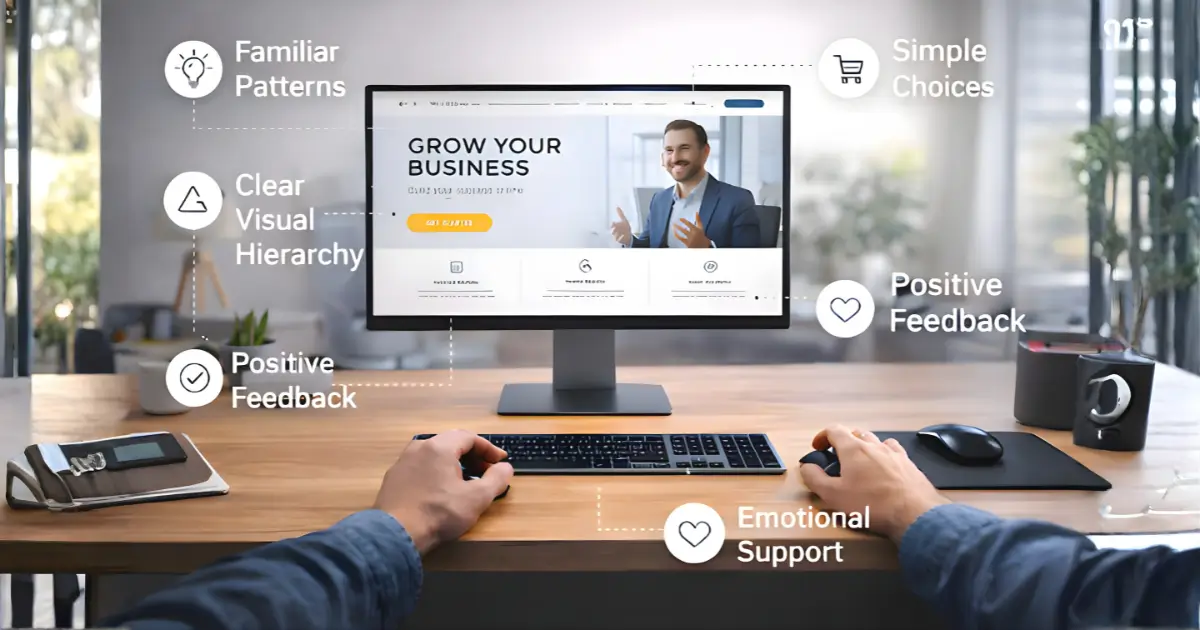
Ever land on a website and just get it? You know where to click, what to read, and how to find what you need, no second-guessing. That’s not magic. It’s psychology. The most effective websites are designed with the human brain in mind. They anticipate user behavior and remove friction at every step.
Let’s break down the science behind websites that feel effortless to use, and why that matters for your business.
1. Familiar Patterns Reduce Cognitive Load
Users don’t want to think too hard. That’s why common layout patterns (like logos on the top left, nav menus at the top, and CTAs in the center) work so well. Our brains are trained to expect these patterns and feel comfortable when we see them.
Takeaway for business owners: Don’t reinvent the wheel. A familiar layout makes users feel at ease, which leads to more clicks and conversions.
2. Visual Hierarchy Guides the Eye
People scan websites, not read them. Designers use size, color, spacing, and contrast to create a visual “path” that leads users through content in the right order, without confusion.
Takeaway for business owners: Make your most important info stand out. Big headings, short paragraphs, and bold buttons go a long way.
3. Fewer Choices = Less Decision Fatigue
When users are bombarded with too many options, they freeze or leave. This is called “choice overload”, and it kills conversions. Simple, focused pages perform better than cluttered ones.
Takeaway for business owners: Limit the number of links, buttons, and calls to action per page. One clear goal per page is the sweet spot.
4. Feedback Loops Create Confidence
Micro-interactions (like a button changing color when clicked or a confirmation message after submitting a form) provide feedback that reassures users they’re on the right track. Without it, users feel unsure and may abandon the task.
Takeaway for business owners: Every click should give visual feedback. It’s a small detail that builds trust in a big way.
5. Predictability Builds Trust
Consistency in colors, fonts, button styles, and content tone helps users feel confident navigating your site. Predictable behavior makes people feel safe, and safe users are more likely to stick around and take action.
Takeaway for business owners: Keep your design system tight and your branding consistent. A seamless experience boosts credibility.
6. Emotionally Supportive Design = Happier Users
Friendly copy, cheerful icons, and intuitive forms reduce stress. Thoughtful touches like helpful tooltips or a reassuring tone in error messages can turn frustration into loyalty.
Takeaway for business owners: A website that feels human leaves a positive emotional imprint. That’s good UX and good branding.
Final Thoughts: Good UX Feels Invisible
The best websites don’t force users to think; they guide them gently, predictably, and pleasantly. When you understand the psychology behind ease of use, you can design experiences that not only look great but also feel right.
Want to make your website feel effortless? Let’s craft something that clicks, literally and mentally. Contact WebLychee today!
0 Comments